Insights & Stories
Bedell Journal & Blog
Stories of Craftsmanship, Sound & Stewardship
Exploring Rainforest Stewardship & Acoustics
Premium Rosewood Acoustic Guitars promise rich bass, clear trebles, and a striking grain pattern, but wood alone cannot guarantee a great instrument. The guitar’s construction, bracing, body shape, and setup all influence its sound and feel. A rosewood back may shimmer under stage lights; the neck still needs to feel comfortable, and the strings should respond evenly across the fretboard.
Bob Taylor, co-founder of Taylor Guitars and an experienced guitar maker, offers a useful principle: rosewood is one part of an instrument’s voice, not the whole story. That perspective helps keep this guide grounded. Rather than treating premium materials as proof of superior performance, we’ll consider tone, playability, build quality, and practical value together. There is no perfect choice for every player.
The ten guitars ahead span different designs and price points. Some may suit fingerstyle players seeking note separation; others may better fit strumming, recording, or live performance. Listen for warmth, balance, and sustain, but notice how the guitar feels in your hands, too. A glossy finish can impress in a photograph. A comfortable neck matters longer. These picks are a starting point, not a substitute for trying an instrument when possible. Even a highly praised guitar may not fit your style, and that is worth admitting.
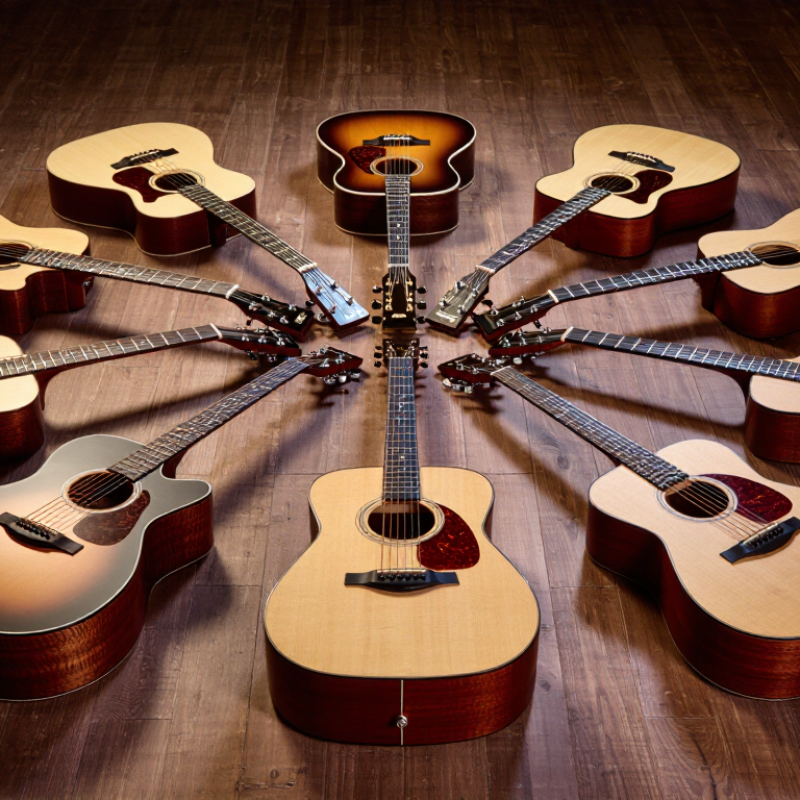
Rosewood is a broad trade name, not one uniform tonewood. Indian rosewood (Dalbergia latifolia), for example, often gives an acoustic guitar a rounded low end and clear, ringing overtones. Yet species, drying, body shape, and construction all affect the result. The back and sides matter, but they do not work alone. Listen for note separation and sustain, rather than assuming every rosewood guitar sounds rich in the same way. Even careful comparisons can be imperfect; strings and room acoustics change what you hear.
Tips: Ask for the botanical species and written documentation before buying. Many Dalbergia species are listed in CITES Appendix II, while Brazilian rosewood (Dalbergia nigra) is listed in Appendix I. The exact listing matters.
Appendix II is not a blanket ban on owning a guitar. However, international trade requirements can depend on the species, the instrument’s materials, and the shipment. Some finished musical instruments may qualify for exemptions, while raw wood or other products may face different requirements. Rules and exceptions can change, so check current CITES guidance and the destination country’s requirements before shipping or reselling. Keep receipts and any species or origin records with the instrument. A seller’s confident assurance is helpful, but it is not a substitute for verifiable paperwork.
Body shape changes reach and posture before it changes tone. A dreadnought’s broad lower bout can press against the picking arm, while a concert-sized body often leaves more room near the elbow. A shallow waist may sit comfortably on one player’s knee but shift around on another’s. Small details matter: where the waist rests, whether the upper bout crowds the ribs, and how far the fretting shoulder must reach. Rosewood does not determine these fit factors. Try the guitar seated, with the strap adjusted to your usual height.
Scale length affects string feel. Professional string-tension charts calculate tension from scale length, pitch, and string mass; at the same tuning and gauge, 25.5 inches produces about 6% more tension than 24.75 inches. That difference can make bends feel firmer and fretting pressure more noticeable, though action and string gauge also matter. Shorter scales may feel easier under the fingers. Not always. Players with a long reach may prefer the wider spacing often associated with longer scales. These figures are a comparison, not a comfort guarantee; hand size and technique can overturn the expectation. A useful test is a slow barre chord, followed by a clean bend at the twelfth fret. Notice shoulder strain, buzzing, and fingertip pressure before judging the finish or price.
When comparing ten premium rosewood acoustics, look beyond the wood description. Solid rosewood back and sides usually cost more than layered construction, while the soundboard, bracing, and neck also shape the instrument’s response. Check the specifications carefully; “rosewood” alone does not tell you how much is solid wood. A clean neck joint, even fret ends, and stable tuning matter during hands-on inspection.
Rosewood often lends a deep bass, clear overtones, and strong note separation, especially when paired with a responsive soundboard. The result can feel rich under light fingerpicking and full during strumming. But room acoustics, strings, and setup change what you hear. Play a few familiar chords, then listen for muddy bass or sharp treble. Small details matter.
Price rises with materials, labor, finish, and setup, but a higher tag does not guarantee a better fit. Compare instruments at similar volumes and, where possible, with the same strings. Ask about humidity care and warranty coverage before buying. Heavy gloss can look striking. It can also show fingerprints. My own preference would be a balanced midrange, though that judgment is subjective; a bright, projecting guitar may suit another player better.
A practical comparison of premium rosewood acoustic-guitar configurations, covering typical construction, tonal character, and approximate new-guitar pricing.
| Rank | Rosewood acoustic configuration | Back and sides | Typical top and bracing | Common body / scale length | Typical sound and playing feel | Approx. new price (USD) | Best suited to |
|---|---|---|---|---|---|---|---|
| 1 | Premium dreadnought steel-string | East Indian rosewood (Dalbergia latifolia), solid back and sides | Solid Sitka or European spruce; scalloped X-bracing is common | Dreadnought; usually about 25.4–25.5 in scale | Strong bass, clear trebles, and generous volume; responds well to firm strumming. | $2,500–$6,000 | Flatpicking, ensemble playing, and players who want substantial projection. |
| 2 | Premium OM steel-string | East Indian rosewood, solid back and sides | Solid spruce top; X-bracing, often scalloped | Orchestra Model; commonly about 25.4 in scale | Balanced bass and treble with clear note separation; comfortable for fingerstyle and mixed playing. | $2,500–$6,500 | Players seeking an all-purpose body with strong articulation. |
| 3 | Premium grand auditorium steel-string | East Indian rosewood, solid back and sides | Solid spruce top; X-bracing | Grand auditorium; typically around 25.4–25.5 in scale | Even response across the frequency range, with more low-end body than many smaller bodies. | $2,500–$7,000 | Players who alternate between strumming, flatpicking, and fingerstyle. |
| 4 | 000 steel-string with a cedar top | East Indian rosewood, solid back and sides | Solid Western red cedar; commonly X-braced | 000 body; many versions use a scale near 24.9 in | Warm, quick response with a softer attack than a typical spruce-topped guitar; excels at lighter dynamics. | $2,500–$6,500 | Fingerstyle players and those who prefer a compact, comfortable body. |
| 5 | Premium jumbo steel-string | East Indian rosewood, solid back and sides | Solid spruce top; X-bracing | Jumbo body; scale length varies, often near 25.5 in | Broad, room-filling sound with strong bass and a large dynamic range. | $3,000–$8,000 | Strummers and performers who want a large-bodied guitar with substantial output. |
| 6 | 12-fret 000 steel-string | East Indian rosewood, solid back and sides | Solid spruce top; X-bracing, with bridge position determined by the 12-fret layout | 000 body; neck joins the body at the 12th fret; scale varies by build | Often warm and responsive, with a comfortable reach and a distinctive balance suited to nuanced playing. | $3,000–$8,000 | Fingerstyle players and those who value relaxed fretting-hand reach. |
| 7 | Slope-shoulder dreadnought steel-string | East Indian rosewood, solid back and sides | Solid spruce top; bracing pattern and voicing vary by maker | Slope-shoulder dreadnought; scale commonly around 24.75–25.5 in | Full low end with a rounded, open response; exact character depends strongly on body dimensions and bracing. | $3,000–$8,000 | Players looking for a powerful strumming guitar with a less tightly focused response. |
| 8 | Premium OM with Madagascar rosewood | Madagascar rosewood (often sold as Dalbergia baronii), solid back and sides | Solid spruce top; X-bracing is common | OM body; typically about 25.4 in scale | Clear, articulate response and strong note separation; tonal results vary with the individual set and build. | $5,000–$14,000 | Players seeking an upscale fingerstyle or all-purpose instrument and verified wood documentation. |
| 9 | Concert classical guitar with cocobolo | Cocobolo (Dalbergia retusa), solid back and sides | Solid cedar or spruce top; fan bracing is typical of classical construction | Classical body; commonly about 650 mm scale | Warm, rounded nylon-string tone with clear upper-register detail; response depends on top, bracing, and setup. | $3,500–$10,000 | Classical players seeking a premium instrument; check applicable documentation and trade rules. |
| 10 | Custom Brazilian rosewood steel-string | Brazilian rosewood (Dalbergia nigra), solid back and sides | Solid spruce top; bracing and body style specified by the builder | OM or dreadnought; scale varies by build | Highly individual response; the instrument’s construction and condition matter as much as the wood species. | $10,000–$30,000+ | Collectors and experienced players able to verify provenance, permits, and legal sale requirements. |
Price and materials note: These are broad, indicative ranges for new instruments or custom builds, not prices for specific models; actual prices vary with workmanship, materials, region, and availability. “Solid” describes the back and sides, not just a rosewood veneer. Rosewood trade restrictions differ by species and jurisdiction; confirm current CITES and local requirements, especially for Brazilian and Madagascar rosewood, and retain any required documentation.
When comparing premium rosewood acoustic guitars, separate the back-and-sides wood from the soundboard. Many models pair solid rosewood back and sides with spruce or cedar tops, and that pairing shapes the instrument’s response. Look for clear construction details, not just the word “solid.” A glossy finish can hide the grain; inspect the interior with a light if possible.
Bracing affects stiffness, sustain, and how readily the top responds to a light touch. Scalloped or forward-shifted bracing may produce a lively feel, but neither label guarantees better tone. Play a few open chords, then pick individual notes near the bridge and soundhole. Listen for even volume across the strings. Small differences matter. One comparison can still mislead, since strings and room acoustics change what you hear.
Electronics deserve the same scrutiny as the acoustic build. Check pickup type, onboard controls, tuner accuracy, and whether the plugged-in sound preserves the guitar’s natural balance. Factory specifications should include scale length, nut width, body depth, bracing pattern, and finish. Compare those figures with the actual setup: action that feels high in a showroom may be adjustable, but a narrow neck cannot be widened. Specs are useful, not sacred. I would treat missing details as a reason to ask more questions, rather than assume the instrument is poorly made.
A premium rosewood guitar begins with traceable timber, not a glossy finish. Ask the seller for the wood’s botanical species, harvest origin, and supply-chain documents. CITES listings and trade requirements differ by species and product form, so verify current records before buying or shipping internationally. The FAO’s Global Forest Resources Assessment 2020 estimated 4.06 billion hectares of forest worldwide, while reporting annual deforestation of about 10 million hectares in 2015–2020. Those global figures do not measure rosewood stocks specifically, but they underline why vague sourcing claims deserve scrutiny. A certificate helps; it is not a complete account of a tree’s journey.
After purchase, keep the instrument near 45–55% relative humidity. Use a digital hygrometer, and check it where the guitar rests, not across the room. The USDA Forest Products Laboratory’s Wood Handbook explains that wood exchanges moisture with surrounding air and changes dimension as its moisture content shifts. In practical terms, prolonged dryness can open seams or shrink a fretboard; excess moisture can swell wood and soften response. Small changes matter. A case humidifier can help in a dry room, but over-humidifying is easy if you skip the hygrometer. Check the guitar weekly during heating season, and look for sharp fret ends, a rising bridge edge, or new cracks. Not every setup problem comes from humidity, so consult a qualified repairer before adjusting the instrument yourself.
No. Species, drying, body shape, and construction all affect the sound. Listen for clear notes and sustain.
Ask for the botanical species, harvest origin, and written records. Vague sourcing claims deserve questions.
No. Ownership is not automatically prohibited. Trade and shipping requirements may depend on the species and instrument.
Review current CITES guidance and the destination country’s requirements. Keep receipts and species records nearby.
Check whether the back and sides are solid wood. Inspect the interior with a light if possible.
Bracing can affect response and sustain, but labels do not guarantee tone. Try open chords and individual notes.
Compare scale length, nut width, body depth, bracing, and finish. Missing details are a reason to ask more.
Aim for 45–55% relative humidity. Use a digital hygrometer near the guitar. Check weekly during heating season.
Look for sharp fret ends, new cracks, or a lifting bridge edge. Not every setup issue comes from humidity. Ask a qualified repairer.
Premium Rosewood Acoustic Guitars offer a wide range of tonal colors, from clear trebles and balanced mids to rich, resonant lows. This guide explains how different rosewood species and other tonewoods influence sound, appearance, and weight, while outlining how body shape and scale length—from 24.75 to 25.5 inches—can affect comfort, string tension, and playability. It also compares ten premium instruments by construction, sound, and price, without treating any single design as right for every player.
The overview considers solid-wood construction, bracing patterns, onboard electronics, and factory specifications to help readers make informed comparisons. It also explains why buyers should check sourcing documentation and applicable CITES Appendix II trade requirements when purchasing rosewood instruments. For long-term care, the guide recommends monitoring indoor conditions and aiming for a relative humidity of 45–55%, helping protect the guitar’s wood and structural stability.