Insights & Stories
Bedell Journal & Blog
Stories of Craftsmanship, Sound & Stewardship
Exploring Rainforest Stewardship & Acoustics
Choosing Brazilian Rosewood Acoustic Guitars begins with a beautiful contradiction. Their dark, flowing grain attracts attention, yet appearance predicts little about sound. A serious evaluation starts with the complete instrument, not the species label. Luthier Dana Bourgeois expresses the guiding idea clearly: tone comes from the interaction of the whole instrument. That principle matters here. Brazilian rosewood may produce complex overtones, strong projection, and long sustain. However, bracing, voicing, body shape, and setup remain equally important. The finest guitar should feel alive in your hands.
Listen carefully in a quiet room. Compare the same chord across several instruments. Notice whether bass notes remain focused beside bright treble strings. Check how quickly each note blooms, then fades. Some guitars sound impressive immediately but become tiring after twenty minutes. That is easy to miss. Play softly, loudly, and with a capo. A responsive guitar should reveal detail without demanding excessive force. Examine the fretwork, neck angle, bridge position, and action near the twelfth fret. Small imperfections can become expensive frustrations.
Provenance deserves equal attention. Brazilian rosewood is internationally regulated, so responsible sellers should provide clear documentation and legal sourcing details. Do not accept vague claims about “old stock” without evidence. Ask about humidity history, repairs, warranty coverage, and return conditions. I would not choose purely by color, price, or reputation. My own preference would remain slightly cautious: a less dramatic-looking guitar with better balance may become the more trusted companion. The choice is personal, imperfect, and best confirmed by patient playing rather than polished photography.
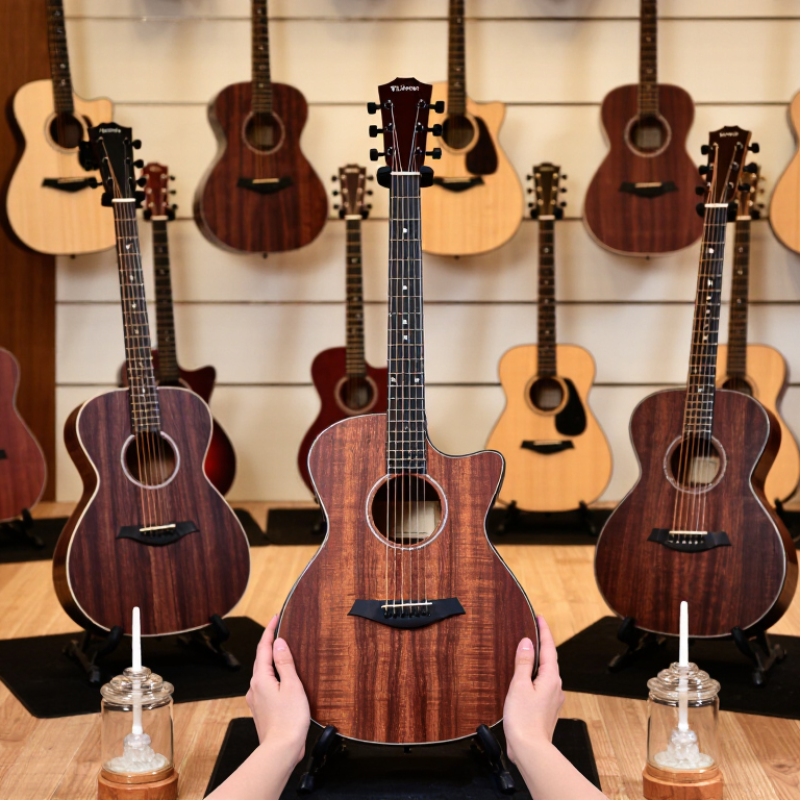
Brazilian rosewood, or Dalbergia nigra, originates mainly from Brazil’s Atlantic Forest. Its natural range has suffered severe habitat loss. CITES lists the species in Appendix I, making documented legal origin essential. Ask for traceable paperwork before judging appearance. Attractive grain alone proves nothing.
The wood is dense, hard, and naturally oily. The USDA Forest Products Laboratory reports comparable rosewood species with specific gravities near 0.80 to 0.90. Compiled testing data from The Wood Database lists Brazilian rosewood near 835 kg/m³ at standard moisture conditions. That density can support strong projection, focused bass, and clear treble. It may also increase instrument weight.
A well-made guitar can produce complex overtones, quick response, and noticeable sustain. Brazilian rosewood often adds glassy note separation, especially during fingerstyle passages. However, wood does not work alone. Bracing, top thickness, neck geometry, and setup change the result dramatically. I once trusted dramatic dark streaks too quickly; the guitar sounded less responsive than a plainer instrument. That mistake still matters.
When comparing instruments, play identical chords softly and forcefully. Check whether bass notes remain controlled. Listen for harshness above the twelfth fret. Examine the grain, joins, finish, and humidity history. Professional inspection is worthwhile, because dense wood can hide small structural problems. CITES documentation should accompany any purchase involving international movement.
How to Verify Brazilian Rosewood Authenticity and Legal Documentation
A dark, oily-looking fingerboard is not proof of Brazilian rosewood. Color and grain vary, and photographs can hide important details. Ask an independent, experienced luthier or wood specialist to inspect the instrument and compare its features with reliable botanical references. Wood identification may require microscopic examination; visual judgment alone has limits. Be cautious of certainty based only on a seller’s description.
Documentation matters as much as identification. CITES lists Dalbergia nigra, the botanical name for Brazilian rosewood, in Appendix I; the CITES checklist records its listing date as June 11, 1992. This date is a useful reference, not proof that a particular guitar is compliant. Request dated records that connect the instrument to its wood source, including invoices, permits or certificates required for the relevant transaction, and any re-export paperwork. Check that species names, dates, quantities, and instrument details agree across records. Keep copies.
Small mismatches matter. A generic “rosewood” entry may not identify the species, while a document for raw timber may not clearly cover a finished guitar. Confirm requirements with the responsible authority in the country involved; rules can depend on the instrument’s history and destination. CITES documentation and appendices are available through the Convention’s official website. Even careful checks can leave questions, so pause a purchase when records cannot be independently verified.
Brazilian rosewood is Dalbergia nigra. Under CITES, this species is listed in Appendix I, while most other Dalbergia species are listed in Appendix II. The chart uses the numerical mapping I = 1 and II = 2 only to visualize the different CITES control categories; it is not a legality score.
Before buying a guitar described as Brazilian rosewood, confirm the scientific identification, request documentation showing the material's legal acquisition history, and check whether the instrument requires CITES export, re-export, or import documentation for the countries involved. A seller's description or visual grain pattern alone cannot establish species identity or legal origin.
Sources: CITES Appendices; CITES Species+.
A Brazilian rosewood acoustic guitar should feel balanced before its wood looks impressive. A dreadnought body offers strong bass and volume, while a smaller concert shape can feel easier to hold and clearer at low playing volumes. Try both seated and standing. Your strumming arm should rest naturally, and the body should not pull your shoulder forward.
Wood grade is not a reliable shortcut to tone. Examine the back and sides for stable joints, consistent grain, and signs of cracks or repairs. Natural color varies, and dramatic grain does not guarantee better sound. Listen for even notes across the fretboard, clean sustain, and a response that suits your touch. Some rosewood guitars can sound bright in one room and warmer in another; judging from a single quick test is imperfect.
Tips: Check neck relief, fret ends, and bridge alignment in good light. Ask how the instrument was stored and maintained, and have a qualified repairer inspect it if anything feels uncertain. Pay attention to construction details, too: clean internal bracing, secure binding, and a well-fitted neck matter during years of temperature changes. A beautiful finish can distract. Don’t let it.
How to Choose Brazilian Rosewood Acoustic Guitars
Brazilian rosewood suits players seeking deep bass, glassy trebles, and strong harmonic color. Its dense structure can produce clear note separation during fingerstyle passages. The Wood Database reports typical density near 0.85–0.95 g/cm³ and Janka hardness around 2,790 lbf. Those figures suggest durability, but they do not guarantee a better guitar. I once overvalued visual grain and underestimated neck feel. That was an expensive lesson.
Tips: Match the wood to your playing style. Fingerstyle players may appreciate its layered overtones and quick response. Flatpickers should test bass control at louder volumes. Strum near the bridge, then beside the soundhole. Listen for compression, sustain, and unwanted boom. Short tests can mislead.
For balanced accompaniment, choose a guitar with controlled bass and moderate overtone bloom. For solo arrangements, a more resonant voice can add depth between melody notes. Recording engineers often prefer predictable midrange, especially with close microphones. Bring your own pick and play familiar pieces. Brazilian rosewood also demands careful provenance. CITES lists Dalbergia nigra in Appendix I, requiring strict international trade controls. Review documentation before buying, and ask whether the instrument’s origin is traceable. The right choice may be less dramatic than expected. Your hands, setup, and room still shape the final sound.
Brazilian rosewood can make an acoustic guitar visually striking, but appearance alone tells little about its sound or durability. Examine the joinery, fretwork, and finish in clear light. Look for clean seams, even frets, and cracks near the bridge or heel. Play every fret, listening for buzzing and uneven volume. A warm, complex tone is appealing, but room acoustics and setup can color what you hear. My first impression is not always right.
Tips: Ask about the instrument’s age, repair history, and documented wood origin. Check the neck relief and bridge height with a qualified technician if possible. Compare the asking price with recent sales of similar instruments in similar condition, not just polished photographs. Small repairs matter; some are stable, while others may worsen.
Condition affects long-term care. Keep the guitar in a stable environment, away from direct sunlight, heaters, and sudden humidity changes. Use a case and monitor humidity rather than guessing by touch. Wipe away sweat after playing, and arrange periodic setup checks. Rosewood can darken or show marks with use. That is normal. A costly guitar is not automatically the right guitar, and I would leave room for doubt until it feels comfortable in your hands.
A dreadnought often provides strong bass and volume. A smaller concert body may feel easier to hold and sound clearer at low volume. Try both seated and standing.
No. Grain and color do not predict sound reliably. Listen for even notes, clean sustain, and a response that suits your touch.
Check joints, cracks, repairs, internal bracing, binding, neck fit, and bridge alignment. Look closely in good light.
It may provide deep bass, glassy treble, and rich overtones. Its clear note separation can suit fingerstyle playing, but individual guitars vary.
Bring a familiar pick and play pieces you know. Strum near the bridge and soundhole, then listen for sustain, compression, and excessive bass.
Test bass control at louder volumes. A guitar that sounds balanced softly may become boomy when played hard.
Not always. A guitar can sound brighter in one room and warmer in another. Your setup and playing touch matter, too.
Inspect neck relief and fret ends. If something feels uncertain, ask a qualified repairer to examine the instrument.
Documentation can help establish traceable provenance. Ask about the instrument’s origin and available records before making a decision.
Choosing Brazilian Rosewood Acoustic Guitars begins with understanding the wood’s distinctive appearance, tonal qualities, and natural variation. Its visual character and acoustic response can differ from instrument to instrument, so consider how the wood’s warmth, resonance, and clarity suit your preferences. Before buying, ask for reliable documentation that supports the wood’s identification and confirms that the instrument has been sourced and sold in accordance with applicable requirements.
Next, compare body shapes, wood grades, and construction details, since these affect comfort, projection, and overall sound. Match the guitar to your playing style and musical goals, then carefully assess craftsmanship, condition, and price. Look for clean construction, stable components, and signs of damage or excessive wear. Finally, plan for attentive long-term care, including protection from abrupt changes in temperature and humidity, to help preserve the instrument’s condition and performance.