Insights & Stories
Bedell Journal & Blog
Stories of Craftsmanship, Sound & Stewardship

Choosing among Parlor Size Acoustic Guitars is less about finding the smallest instrument and more about matching its feel and voice to your playing. A compact body can sit comfortably against your ribs, fit easily into a crowded train compartment, and feel balanced during a long practice session. Yet “parlor” does not guarantee one standard size or sound. Models differ in scale length, nut width, bracing, and body depth.
Industry reports offer useful context, but not a simple answer. NAMM’s Global Report tracks the wider musical-products industry, while Reverb’s annual gear reports describe activity across its instrument marketplace. Neither should be treated as a definitive ranking of parlor guitars. Public industry data rarely isolates this body style, so hands-on comparisons matter. Try a few models, and listen closely.
Small details count. Does your thumb clear the neck? Can you fret a first-position chord without strain? Does the guitar sound warm when fingerpicked, or clear enough for a firm strum? Guitar historian and vintage-instrument dealer George Gruhn is a relevant authority on instrument construction and history, but I can’t verify a verbatim statement from him specifically about parlor guitars from the material provided. A quotation without a checkable source would create false confidence.
This guide focuses on practical selection: fit, tone, build quality, and playing context. Some trade-offs remain personal. That’s the point. A guitar may look perfect under showroom lights and still feel awkward after ten minutes.
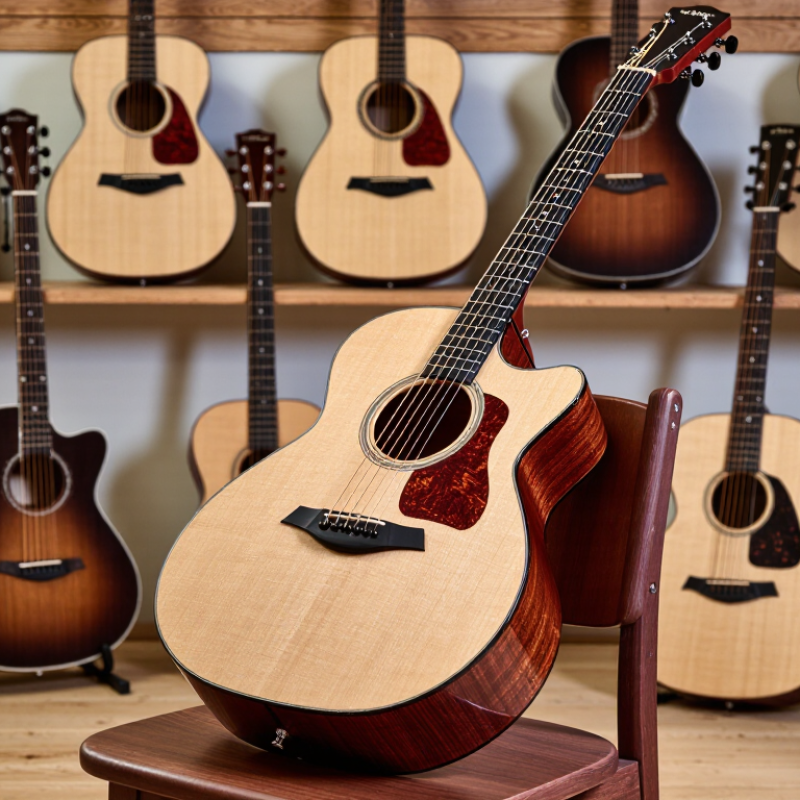
A parlor guitar has a compact body, but “parlor” is not a universally fixed size. A cross-check of professional lutherie specification sheets shows common examples with body lengths near 18–19 inches and lower bouts around 12–13 inches. Treat these as working ranges, not a formal standard. The scale length also matters: a shorter scale can make fretting feel easier, while body shape and bracing affect tone and comfort.
Dimensions shape more than portability. Fletcher and Rossing’s technical reference, The Physics of Musical Instruments, explains how an instrument’s air cavity and vibrating surfaces contribute to resonance. In practical terms, a smaller body may emphasize clear mids, while producing less bass than a larger guitar. That is a tendency, not a promise; wood, construction, strings, and setup all change the result. A tape measure helps, but it cannot tell you how the guitar will feel against your ribs.
Tips: Compare body length, lower-bout width, and scale length before buying. Sit with the guitar and check whether its waist rests comfortably on your leg. If possible, play a few low notes and open chords. Small bodies can sound surprisingly full. Sometimes, they do not.
| Dimension or Feature | Typical Parlor Range | What It Means | Choosing Tip |
|---|---|---|---|
| Body length | About 18–19.5 in (46–50 cm) | The distance from the neck joint area to the end of the body. | A shorter body can feel compact against the torso, especially when seated. |
| Lower bout width | About 12–13.5 in (30–34 cm) | The widest part of the lower body bout. | Choose a narrower lower bout if a full-size guitar feels bulky on your lap. |
| Upper bout width | About 9–10.5 in (23–27 cm) | The width of the upper body section near the neck. | Try the guitar while seated to check how comfortably the upper bout sits against your chest. |
| Waist width | About 7.5–8.5 in (19–22 cm) | The narrowest point between the upper and lower bouts. | A defined waist can help the instrument rest steadily on a player's leg. |
| Body depth | About 3.5–4.25 in (9–11 cm) | The front-to-back thickness of the body, usually measured at the sides. | Shallower bodies may feel easier to hold; body depth also affects acoustic response. |
| Scale length | About 24–25.5 in (61–65 cm) | The vibrating string length from the nut to the saddle, as defined by the instrument's design. | A shorter scale often means slightly less string tension at the same tuning and string gauge. Check fretting feel in person. |
| Nut width | About 1.68–1.81 in (43–46 mm) | The width of the fingerboard at the nut, where the strings meet the headstock end of the neck. | A narrower nut can suit compact hand positions; a wider one provides more room between strings for fingerstyle playing. |
| Body shape | Compact, waisted outline; proportions vary | Parlor guitars are generally smaller-bodied than common dreadnought designs, but “parlor” does not specify one exact shape. | Compare actual body measurements rather than relying on the model-size label alone. |
| Typical tonal character | Often focused, clear, and balanced | A smaller air cavity and body size can produce a different bass response and projection from larger-bodied guitars. | Listen to the guitar in the playing style you use most; bracing, materials, strings, and setup also affect tone. |
| Best-fit considerations | Playing comfort, reach, and intended use | Compact dimensions can be convenient for travel, relaxed practice, and players who prefer a smaller body. | Check seated and standing comfort, neck reach, action, and tuning stability before choosing. |
Measurement note: These ranges describe common compact acoustic-guitar proportions, not a universal standard. For a reliable comparison, consult the instrument’s published specifications and try it in person when possible.
Common examples have body lengths near 18–19 inches and lower bouts around 12–13 inches. These are working ranges, not fixed standards.
Not always. A compact body may sit comfortably on your leg, but fit depends on your height, arm length, and posture.
Sit as you usually play. Check whether the body rests against your ribs and clears your forearm. Give it time.
Try open chords and low single notes. Listen for clear bass, then strum firmly from several feet away.
It may have clear mids and quick response, but less bass is common. Construction, strings, and setup can change the sound.
It can make fretting feel easier. Still, check whether your hand reaches first-position chords comfortably.
Use the same short passage on each one. Try seated and standing, then compare gentle fingerpicking with a firm strum.
It can work well in small rooms or for practice. Test it beside other instruments if you need strong projection. I once judged volume too quickly.
Choosing the right parlor guitar starts with understanding its compact body shape, proportions, and how those dimensions affect sound and comfort. A smaller design can be easier to hold, especially for players with smaller frames or anyone who prefers a more relaxed feel during long practice sessions. Before deciding, consider how the guitar sits when seated and standing, and whether the neck and body feel comfortable in your hands.
Parlor Size Acoustic Guitars can offer a focused, balanced tone, though their volume and projection may differ from those of larger instruments. Think about your playing style and where you plan to play, then compare tonewoods, construction, and practical features such as the neck profile and finish. Whenever possible, try several models in person. Listen for clarity and responsiveness, check that the instrument feels natural to play, and choose the one that best suits your comfort, sound preferences, and musical needs.