Insights & Stories
Bedell Journal & Blog
Stories of Craftsmanship, Sound & Stewardship
Exploring Rainforest Stewardship & Acoustics
Choosing among China’s Steel-String Acoustic Guitars takes more than comparing prices or glossy photographs. Chinese makers offer a wide range, from affordable instruments built for everyday practice to carefully finished guitars for demanding players. The differences show up in the details: a solid spruce top, clean fret ends, stable tuning machines, and a neck that feels comfortable after a long session. Small details matter.
Taylor Guitars master builder Andy Powers is a useful design reference. In paraphrase, his player-focused approach can be expressed this way: “A guitar should serve the music and feel natural in the player’s hands.” Treat that as a guiding principle, not a verified verbatim quotation. It also helps keep product claims in perspective. A solid-wood label alone cannot guarantee strong tone, reliable construction, or a good fit.
This guide compares instruments by construction, sound, playability, and value. It considers how spruce, mahogany, and other common tonewoods shape response, while recognizing that body size and setup matter too. Listen for clear notes, balanced bass, and a comfortable string height; inspect the frets and bridge in person when possible. Reviews can help, but they cannot replace your own hands and ears. Not every recommendation will suit every player. That is worth remembering.
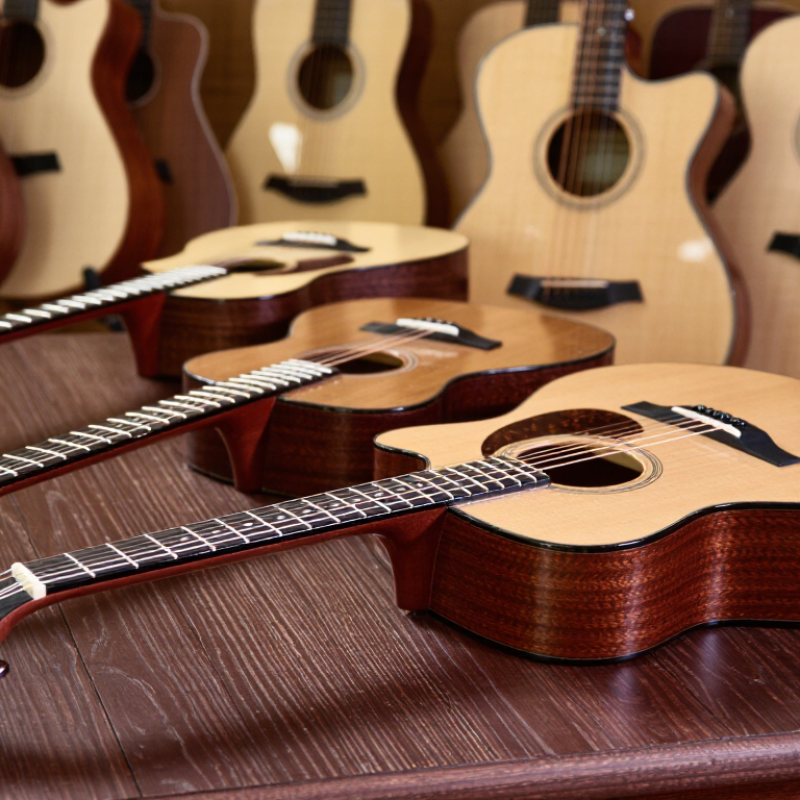
A steel-string acoustic guitar’s “made in China” label mainly identifies where its body and neck are built and assembled. It does not promise one signature sound. Chinese-made instruments vary widely in materials, design, and production methods. Some are produced in large facilities with repeatable processes; others involve smaller workshops and more hands-on finishing. The country of manufacture alone cannot tell you how a guitar will sound or hold up.
Construction details offer better clues. Check whether the neck joins the body cleanly, the frets feel smooth, and the bridge sits flat. Look for tidy bracing and even finish inside the soundhole. Play open chords, then test notes higher up the neck for buzzing or uneven volume. A solid-wood top may respond differently as it ages, while laminate construction can offer consistent performance. Neither choice guarantees quality. I’d be cautious about judging a guitar from its label alone; even a careful inspection can miss issues that appear after setup or regular playing.
Tips: Tune the guitar before testing it. Feel the neck. Listen for rattles, and inspect the action near the first and twelfth frets. If possible, compare several instruments in the same price range; small differences in setup can matter more than country of origin.
A steel-string guitar’s voice begins with its top, while the back and sides help shape its resonance. Solid spruce often gives a clear attack and room to grow louder when played firmly. Cedar responds readily to a light touch, though its softer response may not suit every strong strummer. Mahogany tends to keep the midrange focused; rosewood can create a stronger contrast between bass and treble. These are tendencies, not guarantees. Bracing thickness, glue joints, and body size also affect the sound. Small details matter.
On Chinese-made instruments, materials and workmanship vary between workshops and price levels; country alone predicts little. A well-cut saddle and stable neck can matter more in daily playing than decorative binding. Check fret ends for sharp edges, then play notes high on the neck and listen for buzzing. Low action feels easier, but strings set too low may rattle under a firm attack. A slightly higher setup may suit some players. Low humidity can shrink the wood, expose fret ends, or alter the action. I would not judge a guitar by one bright chord. Listen for clear notes, and notice whether the neck still feels comfortable after ten minutes. Even careful comparisons leave room for personal preference.
Representative air-dry wood density ranges for common acoustic-guitar materials. Density is one factor in a guitar’s response; it does not determine sound or playability on its own.
Spruce is relatively light and commonly used for soundboards, where stiffness and low mass support efficient vibration. Denser woods such as rosewood are often used for backs and sides and can affect resonance and tonal balance. Wood species, thickness, bracing, body shape, and setup all contribute to the finished instrument’s sound and feel. Values are approximate and vary by species, growing conditions, and moisture content.
Among steel-string acoustic guitars made in China, body style helps determine comfort, volume, and tonal balance. Dreadnoughts have broad bodies and strong bass, making them useful for strumming with a singer or playing in a small group. Their size can feel awkward on a couch. Big sound, though.
Auditorium and orchestra-model bodies usually have a narrower waist and a more even response. They suit fingerpicking, light strumming, and players who switch between both. Notes can feel clearer across the strings, but they may not project as strongly as a large dreadnought. Compact parlor guitars are easier to carry and comfortable for quiet practice. Their smaller bodies often produce less low-end power, so consider the room and playing style before choosing one.
Jumbo bodies offer plenty of volume and a wide, full sound, but their size is not comfortable for everyone. A cutaway can make higher frets easier to reach; it is a practical feature, not a body style by itself. Designs and setups vary between instruments, even within the same category. Check how the guitar sits against your body, then listen for buzzing notes and uneven string volume. Try it seated, too. A shape that looks right online may feel different in your hands.
| Body Style | Typical Characteristics | Common Musical Uses | Playing Feel and Practical Notes |
|---|---|---|---|
| Dreadnought | A large, deep-bodied shape with a broad lower bout. It commonly produces strong bass, clear treble, and substantial overall volume. | Flatpicking, bluegrass, strumming, folk accompaniment, and situations where the guitar needs to project. | Its larger body can feel less comfortable for some seated players. Individual instruments vary in bass response and balance. |
| Grand Auditorium | A medium-to-large body, generally narrower than a dreadnought at the waist. Often designed to balance bass, midrange, and treble. | Versatile strumming, fingerstyle, singer-songwriter accompaniment, and mixed playing styles. | A useful all-round shape for players who want a substantial sound without the feel of a very wide-bodied guitar. |
| Auditorium / Orchestra Model | A medium-sized body with a more pronounced waist than a dreadnought. These related labels are not used identically by every maker. | Fingerstyle, light-to-moderate strumming, folk, and recording where a balanced sound is useful. | Often comfortable for seated playing. Compare the actual dimensions, since names and proportions can differ between makers. |
| Jumbo | A large body with a broad lower bout, commonly associated with a full sound and strong bass response. | Big open-chord strumming, country, pop, and vocal accompaniment that benefits from a broad acoustic sound. | The large body can provide volume, but may feel bulky to smaller-framed players. Tone depends on construction and setup as well as size. |
| Concert / Small-Body | A compact body that is typically smaller than an auditorium or dreadnought. It tends to produce less bass than larger shapes. | Fingerstyle, light strumming, home practice, travel, and playing in smaller spaces. | Often easier to hold and reach around. A smaller body does not necessarily mean a shorter neck or scale length. |
| Parlor | A small-bodied style, traditionally associated with a narrow waist and compact proportions. Modern designs vary considerably. | Blues, roots music, fingerpicking, intimate performances, and players seeking a compact instrument. | Convenient to carry and hold, with less low-end air movement than larger bodies. Check the specific instrument’s dimensions and string setup. |
A steel-string acoustic guitar made in China can offer strong value, but country of origin alone tells little about quality. Compare the instrument’s construction, setup, and support. Check whether the top is solid or laminated, and inspect the bridge, binding, and neck joint for clean, even work. Run a finger along the fret ends; sharp edges can make long practice sessions uncomfortable. Small details matter. Play it unplugged. Listen for clear notes across the neck, balanced bass, and any rattling when you strum firmly.
Tips: Bring a tuner and play several open chords, then test notes high on each string. Ask about the return period, warranty coverage, and how the guitar was inspected before shipping. A clear answer is useful evidence; vague promises are not.
Value includes more than the checkout price. A modest guitar with stable tuning, comfortable action, and accessible service may be a better choice than a flashy model needing immediate repairs. If buying remotely, request recent photos of the actual instrument and confirm the seller’s setup process. Still, photos cannot reveal every buzz or feel issue. That uncertainty deserves consideration. Compare several instruments when possible, and allow time for seasonal humidity changes, which can affect neck relief and action. A careful setup may improve playability, but it cannot fix poor construction.
Chinese steel-string acoustics are worth comparing by construction, not country of origin alone. Look for a solid-top dreadnought if you want strong projection for strumming, or an OM-style body for a more balanced sound and easier reach. Smaller travel models can suit tight spaces, though their bass may feel modest. Small details matter.
Among models to consider, compare solid-top versions with laminate alternatives at similar prices. A spruce top often sounds clear and responsive; mahogany can feel warmer, but wood labels do not guarantee a particular tone. Check the listed scale length, nut width, bracing, and included setup. Then inspect the guitar in person, if possible: fret ends should feel smooth, strings should not buzz, and the neck should feel comfortable across the first few frets. Online listings can omit useful setup details. I would not assume every guitar from one workshop plays alike; quality can vary, and that deserves honest attention. Listen for notes that fade unevenly, and ask how returns or adjustments are handled before buying.
Yes. Spruce often gives a clear attack and can grow louder with a firm strum. Cedar may respond well to a light touch. These are tendencies, not promises.
They can shape resonance. Mahogany often keeps the midrange focused, while rosewood may create more contrast between bass and treble. Construction matters too.
Not by itself. Workshop standards and price levels vary. Check the actual instrument, including its neck, bridge, and fretwork.
Feel the fret ends for sharp edges. Play notes high on each string and listen for buzzing. Check that the neck feels comfortable.
Try open chords, then play higher notes along the neck. Low action can feel easy, but very low strings may rattle during firm strumming.
A dreadnought can project strongly for strumming. An OM-style body may feel balanced and easier to reach around. Travel guitars save space, but their bass can feel modest.
Request recent photos of the actual guitar. Ask about setup, returns, warranty coverage, and inspection before shipping. Photos cannot reveal every buzz.
Not necessarily. Compare solid and laminated tops, then consider tuning stability, comfortable action, and available service. A careful setup helps, but cannot fix poor construction.
Yes. Low humidity may shrink the wood, expose fret ends, or change the action. Seasonal changes matter. I would not judge a guitar by one bright chord.
This article explores what makes Chinese-made Steel-String Acoustic Guitars distinctive, focusing on the choices that shape their sound, feel, and overall value. It explains how tonewoods, bracing, body construction, and setup can influence resonance, projection, comfort, and playability, while noting that a guitar’s quality depends on careful design and workmanship rather than its country of origin alone.
Readers will also learn how common body styles suit different musical settings, from intimate fingerstyle playing to fuller strumming and performance. A practical comparison of materials, finish, consistency, reliability, and price can help buyers assess their options and choose an instrument that fits their needs. The article concludes with general guidance on evaluating notable makers and models without relying on brand names.